This week we said goodbye to intern Sarah. We wish her well as she continues her studies at Montana State University as a pre-veterinary student. The newest member of the BMW team is intern April, a student at the University of Idaho, who arrived last week. Her interests include the field of wildlife epidemiology. Intern Sophie, a graduate of Northern Arizona University Honors College, will arrive today. Sophie is pursuing a career as a wildlife veterinarian. What an amazing group of young women we are having the opportunity to work along side this summer!
Work is the operative word. There were 19 admissions during the past week. We saw emaciation, electrocution, gunshot injuries and injured baby birds. Three Says Phoebe nestlings were tangled in horse hair their parents had used as nest material. It cut off the blood supply and they each lost a foot or a leg. The only humane option was euthanasia.
Great Horned Owl 26-261 had been shot. The projectile had fractured several ribs. The owl couldn’t fly well enough to hunt and was starving. At 585 grams, it was at least 40% underweight, too emaciated for us to successfully treat.

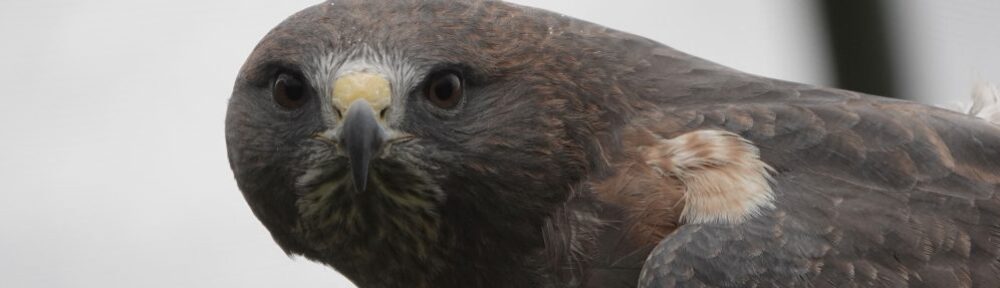
Red-tailed Hawk 26-274 had a badly broken right wing. There were fractures in both the radius and ulna. The damage could not be repaired.

Nestling Swainson’s Hawk 26-275 fell from a crowded nest in Baker County. It’s right elbow was swollen. An x-ray showed a fracture in the right radius and an abnormality in the right hip. X-rays of young birds are challenging to evaluate because the bones are not fully calcified. The hawk can sit upright and move both legs and feet. We are hopeful for a full recovery. In the mean time we will give fluids, pain meds and all the mice it will eat.


It was not all gloom and doom. Tricia and intern April traveled to McNary Wildlife Refuge and released Red-tailed Hawk 26-241. The hawk had been found in a waste water treatment pond covered in goo. A bath and a few days of rest were all that was needed to recover. The hawk took off as soon as April opened the box. Two other red-tails quickly appeared. I’d like to think it was a great family reunion.


The nightly Barn Owl Show has begun. In the photo below 4 young owls are waiting on top of a flight pen for dinner to be served. There are currently 38 Barn Owls flying each night and 8 more that will fledge soon. We will provide mice until they are self sufficient.


