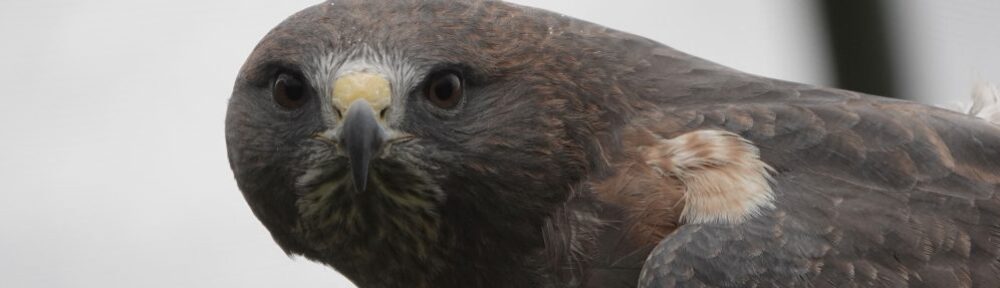
Water fowl are the primary carriers of HPAI. In general, BMW does not admit large numbers of water fowl. We regularly admit Red-tailed Hawks, Great Horned Owls and occasionally Bald Eagles, all high risk species for HPAI. Last week was a typical week.
Red-tailed Hawk 26-007 was found near La Grande, OR unable to fly. The hawk was emaciated, it’s left foot was clenched, there was a minor abrasion on the left hock and a noticeable clicking sound in the left shoulder. An x-ray showed increased density in the left hip, but no fractures.
The most likely causes for the bird’s condition were electrocution, collision with a vehicle and/or HPAI. We ruled out electrocution during the exam. The prognosis for recovery was poor and the hawk was euthanized. The results of an HPAI test will be available later in the week. The x-ray below shows very little muscle, typical of an emaciated bird.

Great Horned Owl 26-008 was found near the USDA agricultural Research Station. It had a wound on the right elbow and punctures on the right foot indicating it might have been electrocuted. X-rays showed fractures in the right scapula, right elbow and left tarsometatarsus, a dislocated right shoulder and hip, and emaciation. A collision with a vehicle seemed the most likely explanation for the injuries. Results of an HPAI test will tell us if the owl was also suffering from the virus.

