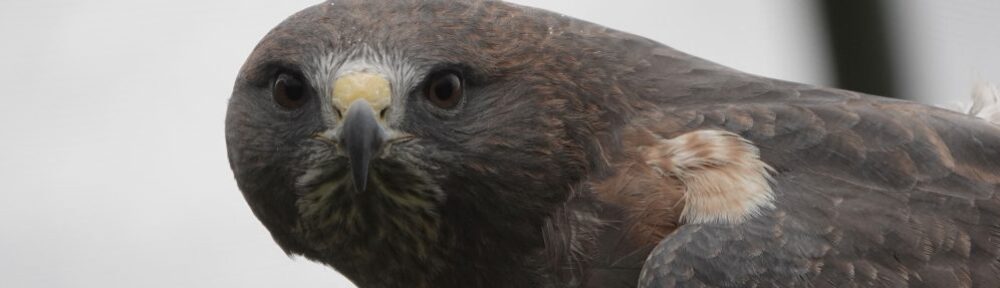
Sharp-shined Hawk 25-486 was admitted on Wednesday, a sure indication that fall migration is underway, as we see these small hawks during the spring and fall. They are bird hunters. Instead of catching a bird, the hawk’s feathers were tangled with weed seed, making him unable to fly. Once the seeds were removed his feathers looked a bit frazzled, but after a few days of preening and dining on coturnix quail he was flying well and released.

Three Great Horned Owls were admitted this past week, all were emaciated. In addition to being extremely thin, owl 25-483 had a fractured left ulna. The prognosis for the bird’s recovery was very poor and it was euthanized.

Hip and spinal injuries seemed to be the cause of emaciation for Great Horned Owl 25-485. The owl’s packed cell volume (the percentage of red blood cells in the blood, PCV) was 38. Its total protein was 1.1. Both of those values were artificially elevated due to the bird’s dehydrated condition. If hydrated, the owl’s total protein would be less than 1.0. In general, we cannot save a bird whose total protein is less than 2.0. Euthanasia was the most humane option. Below is the radiograph of the owl.

Great Horned Owl 25-487 appeared to have been involved in a collision that fractured several ribs. From the physical exam and blood work, we suspect it had been on the ground starving for more than a week. The PCV was 33, a low value that would probably be below 20 if the bird was hydrated. The total protein was very high at 7.0 and there were cheesy lesions in the bird’s mouth. These are signs of aspergillosis, a fungal infection. The fungus is present in the environment. When birds are stressed they are more susceptible to the fungus. In the bird’s debilitated state, the prognosis for recovery was poor and it was euthanized.
Below is a photo of intern Rachel examining the owl while it was under anesthesia. Rachel has been part of the BMW team since August 4, assisting on a daily basis wherever needed. We wish her well as she continues her studies at Oregon State University. Thank you Rachel for all your help.

Rachel and Tricia released a McGillivray’s Warbler at Rice Park…

And a young Swainson’s Hawk at BMW…

There are hazards when working at a rehab center, some more serious than others. Swainson’s Hawk Teddy decorated Tricia’s glasses with a mouse tail during an afternoon training session…
